Bike FittingCycling TipsHealthMaintenance
How to Adjusting Your Bike Seat Height
•3 min read

Of all the adjustments you can make to your bicycle, saddle height is arguably the most important. A seat that is too low can lead to knee pain and inefficient power transfer, while a seat that is too high causes your hips to rock and can lead to lower back issues.
Here are the three most common and effective ways to find your ideal bike seat height.
1. The Heel-to-Pedal Method (The Quick Check)
This is the simplest way to get a baseline measurement. It doesn't require any special tools and can be done in minutes.
- Wear your usual cycling shoes and sit on the bike (you may need a wall or a friend for balance).
- Place your heel on the pedal and rotate the crank until it is at its lowest point (6 o'clock position).
- Your leg should be completely straight without your hips tilting to the side.
- When you move your foot to the correct pedaling position (ball of the foot on the pedal), you will have the perfect slight bend in your knee.
2. The LeMond Method (The Mathematical Approach)
Named after Tour de France winner Greg LeMond, this method uses a specific formula to calculate height based on your inseam.
- Stand against a wall without shoes.
- Place a book between your legs to simulate saddle pressure and measure from the floor to the top of the book. This is your inseam measurement.
- Multiply your inseam (in centimeters) by 0.883.
- The result is the distance from the center of the bottom bracket (the axle the crank arms spin on) to the top of the saddle, measured along the seat tube.
3. The Holmes Method (The Professional Angle)
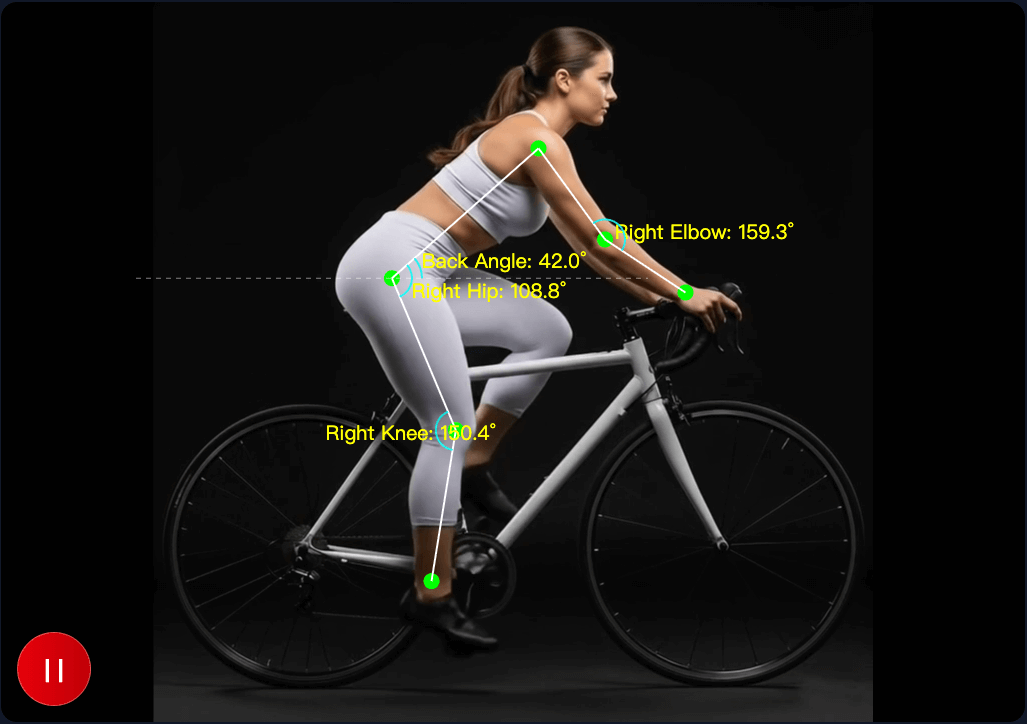
This is the most accurate method used by professional fitters, focusing on the actual angle of the knee joint during the pedal stroke.
- Using a goniometer or a cycling fit app, measure the angle of your knee at the bottom of the pedal stroke.
- The ideal angle is typically between 25 and 35 degrees from a fully straight leg.
- This range minimizes stress on the patella while maximizing the leverage of your quadriceps and glutes.
Fine-Tuning Your Position
Once you’ve set the height, take a short ride. If you feel a sharp pain in the front of the knee, your saddle is likely too low. If you feel pain in the back of the knee or notice your hips rocking, it is likely too high.
Always make small adjustments (3-5mm at a time) and re-test. Small changes can make a massive difference in how your body feels after twenty miles.
Conclusion
Finding the right saddle height is a journey of millimeters. Start with the heel method for a quick fix, use the LeMond formula for precision, and listen to your body to find your perfect 'sweet spot'.